豊平峡ダム
Hōheikyō Dam
- Official Name: 豊平峡ダム Hōheikyō Dam Toyohira Gorge Dam
- Website: http://www.houheikyou.jp/
- Address: Minami Ward, Sapporo, Hokkaido 061-2301, Japan
- Nearest Station: JR Sapporo Station
- Bus Routes: Jōtetsu Bus (Kappa Liner) to Jōzankei, then local shuttle
- Electric Bus Fee: ¥1,000 (round trip for adults), ¥500 (children)
- Dam Access Hours: 8:45-16:00 (May-November)
- Best Viewing: Early to mid-October
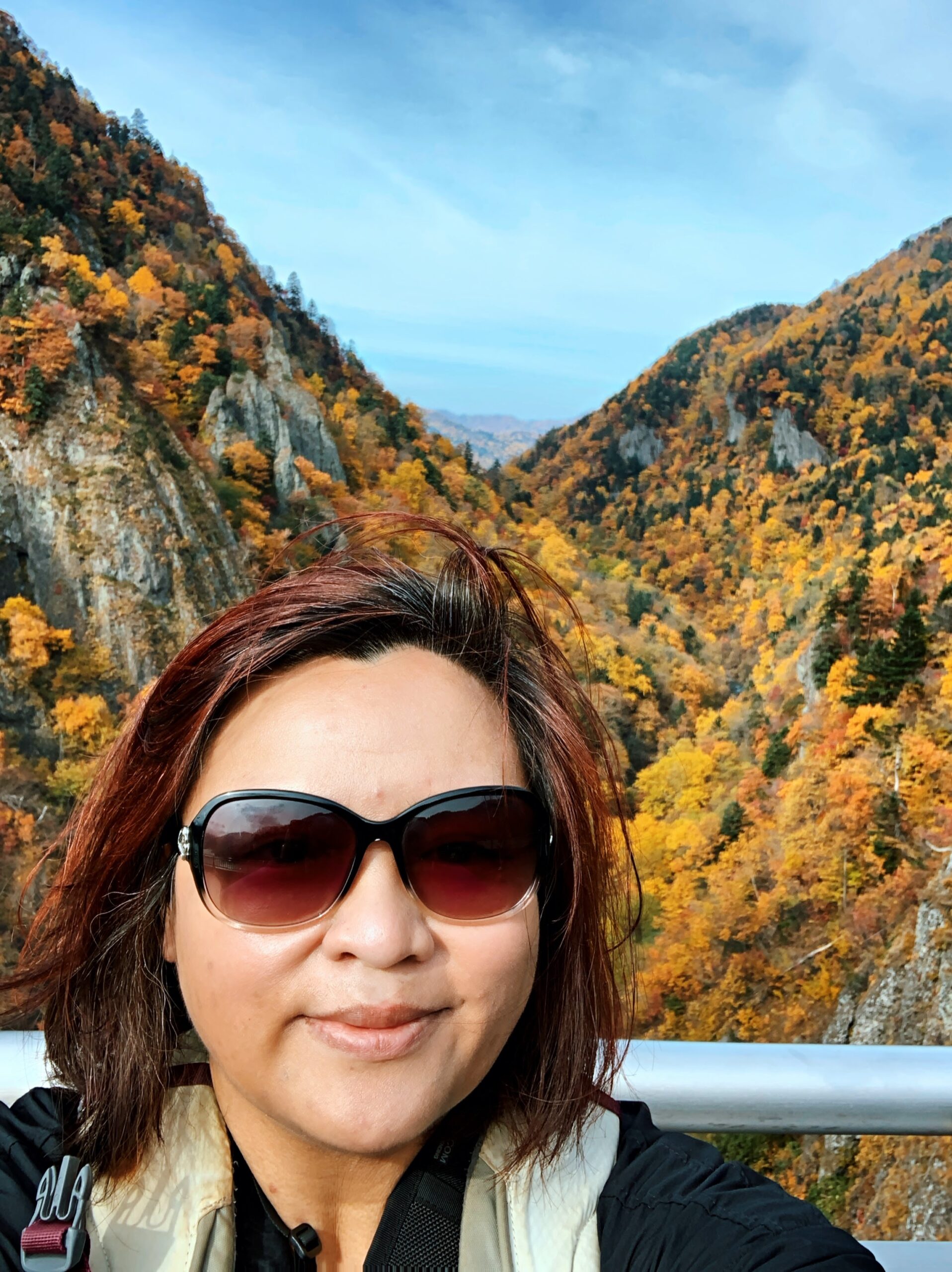
I’ll be honest: before visiting Hōheikyō Dam, I thought it was just another concrete structure dressed up as a tourist attraction. A dam? Really? But after experiencing momijigari — 紅葉狩り — “autumn leaf hunting” at this spectacular location, I’m happy to report I was completely wrong. This place delivers one of the most breathtaking displays of fall colors in all of Hokkaido, wrapped around an engineering marvel that somehow enhances rather than detracts from the natural beauty.
The Japanese have been practicing momijigari for over a thousand years, dating back to the aristocrats of the Heian period who would hold banquets and compose poetry while admiring the changing leaves. The tradition spread to common people during the Edo period, and today it’s as anticipated as cherry blossom viewing in spring. Hokkaido is where the autumn show begins each year, with leaves starting their transformation in mid-September before the color wave sweeps south through the archipelago.
Jōzan Lake and the 102.5-Meter Giant
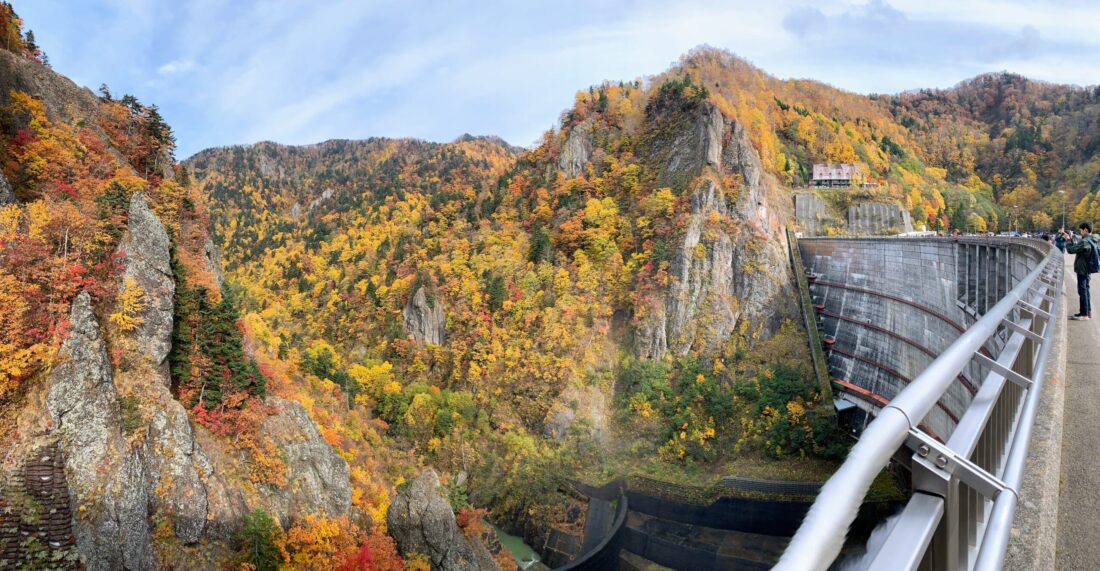
Hōheikyō Dam stands 102.5 meters tall (the equivalent of a 34-story building) and was completed in 1972. Built across the Toyohira River for flood control and hydroelectric power, the arch concrete dam created Jōzan Lake, a reservoir that holds approximately 30 times the volume of Sapporo Dome. It’s been designated as one of Japan’s “Top 100 Waterside Forests” and “Top 100 Dam Lakes” by the Forestry Agency, which should tell you something about its scenic credentials.
What makes this dam special isn’t just its impressive engineering. Located within Shikotsu-Tōya National Park, the entire area is a designated environmental protection zone. No cars, motorcycles, or bicycles are allowed beyond the entrance. Its a rule that initially frustrated me until I realized it’s precisely why the place feels so pristine. The two-kilometer approach to the dam is accessed only by foot or hybrid electric bus, which means the air stays clean and the autumn experience remains wonderfully peaceful.
The Hybrid Electric Bus Journey
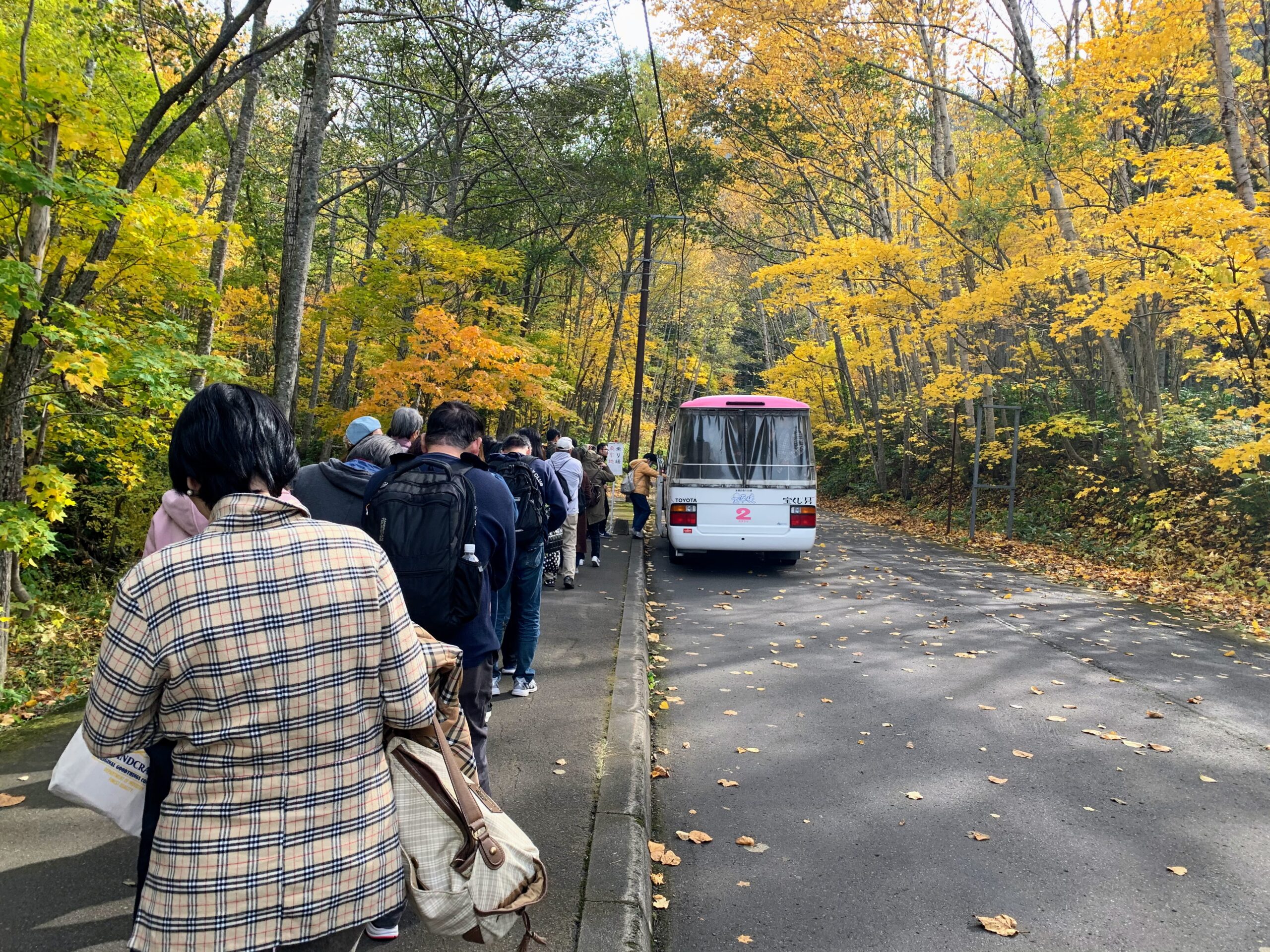
From the parking area, you have two options: walk the two-kilometer road (about 20 minutes), or take the hybrid electric bus that departs every 10 minutes. The bus fare is ¥1,000 for adults and ¥500 for children, round trip. I opted for the bus in and walked out, which I’d recommend if the weather cooperates.
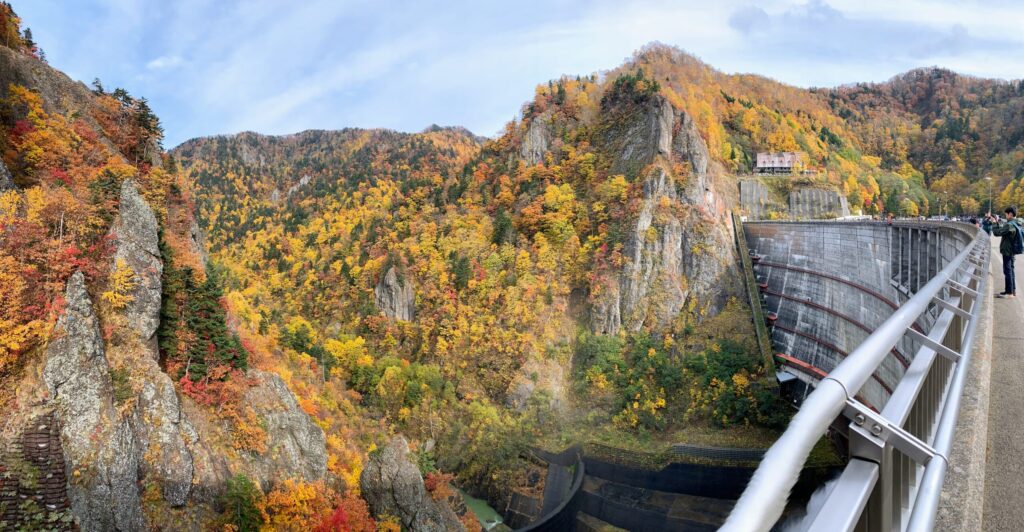
The bus route passes through two long tunnels — Hiyamizu and Hōheikyō — and while it’s only a seven-minute ride, there’s something cinematic about emerging from the second tunnel to find yourself surrounded by mountains ablaze with color. The steep rock slopes flanking the dam create a natural amphitheater, and during peak season in early to mid-October, every tree seems determined to outdo its neighbor in brilliant shades of crimson, gold, and orange.
Water Discharge Spectacle
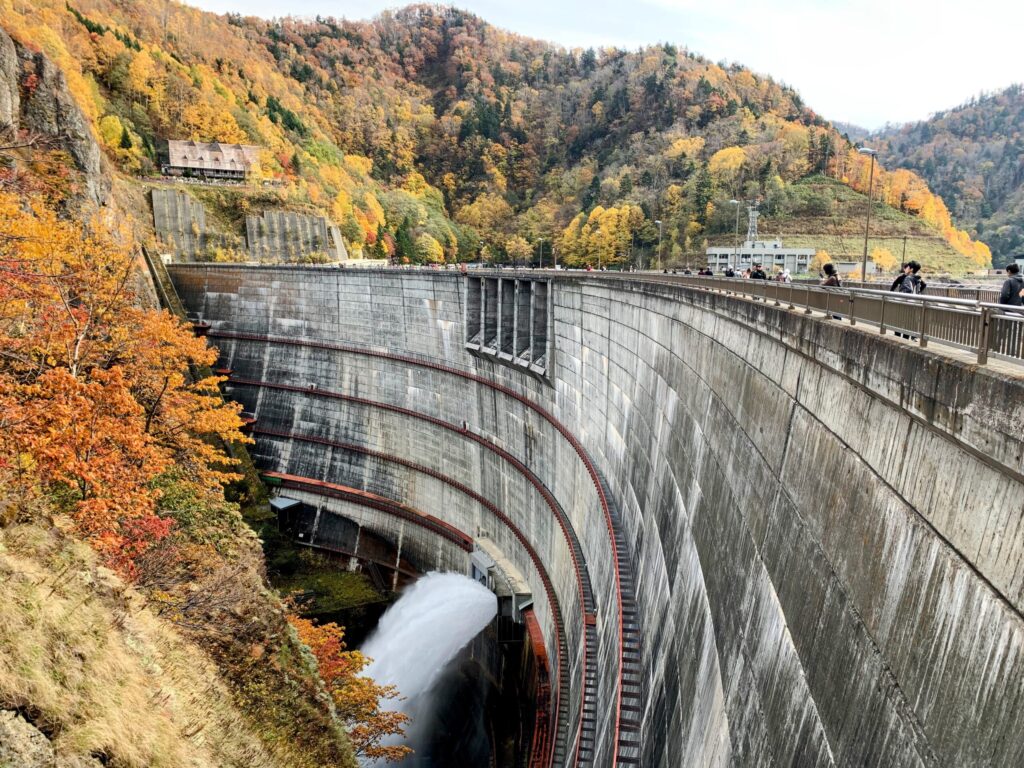
Between June and October, the dam puts on a show with tourist water discharge from 9:00 to 16:00 daily. On weekends and holidays, this starts at 9:00; on weekdays, it begins at 10:00. Watching thousands of gallons of water thunder down from that height while framed by autumn foliage is genuinely spectacular — it’s power and beauty in the same frame. The mist created by the discharge catches the light in the morning sun, adding an almost ethereal quality to the scene.
I arrived around mid-morning on a weekday, and while there were other leaf hunters present, it wasn’t the overwhelming crowd I’d feared. Peak autumn weekends are a different story, though. October can see traffic backed up and parking lots filled by mid-morning, so arriving early or visiting on a weekday is your best bet.
Walking the Grounds
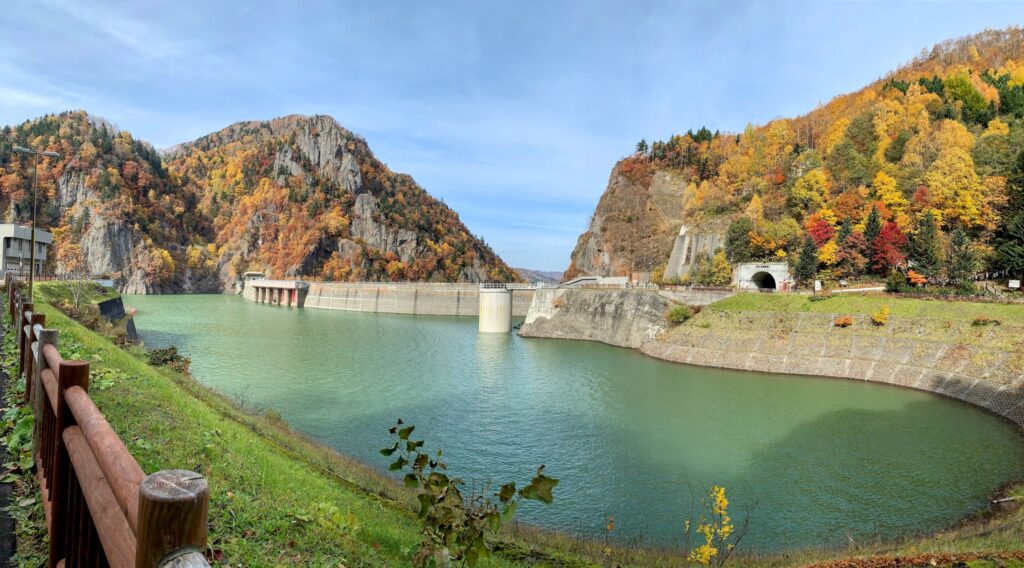
Once you reach the dam area, you’re free to explore at your own pace. A small cable car (capacity 11 people) runs to an observation platform above the dam, though you can also walk up via a well-maintained path. The observation deck offers panoramic views of Jōzan Lake perfectly nestled by surrounding mountains and sky.
The contrast between the dam’s smooth concrete curves and the wild, irregular beauty of the forest is striking. Surrounding the dam are steep rock formations where the autumn foliage clings to seemingly impossible angles, creating what can only be described as a natural painting brought to life. Unlike some momijigari spots that focus on individual specimen trees, Hōheikyō Dam is about the collective where an entire valley of trees interweaves their colors into one cohesive, magnificent landscape.
A walking path follows the dam’s edge, and another trail leads to Kudan-no-taki, a waterfall worth the short detour. The whole area is designed for leisurely exploration, and I’d suggest allowing at least 1.5 to 2 hours to truly appreciate everything.
Dammier Restaurant and Rest House
Near the observation area sits Dammier Restaurant, where you can grab a bite while taking in the views. They serve Jingiskan (aka Genghis Khan, a kind of grilled mutton or lamb), a Hokkaido specialty, along with barbecue options. There’s also a small museum in the rest house with historical photos and information about the dam’s construction. Sadly the information is in Japanese, but Google Translate app will help get you the gist of it and in your preferred language.
At the far end of the grounds, you’ll find another rest area with comfortable seating and floor-to-ceiling windows overlooking Jōzan Lake. It’s a perfect spot to rest your legs and just absorb the scene.
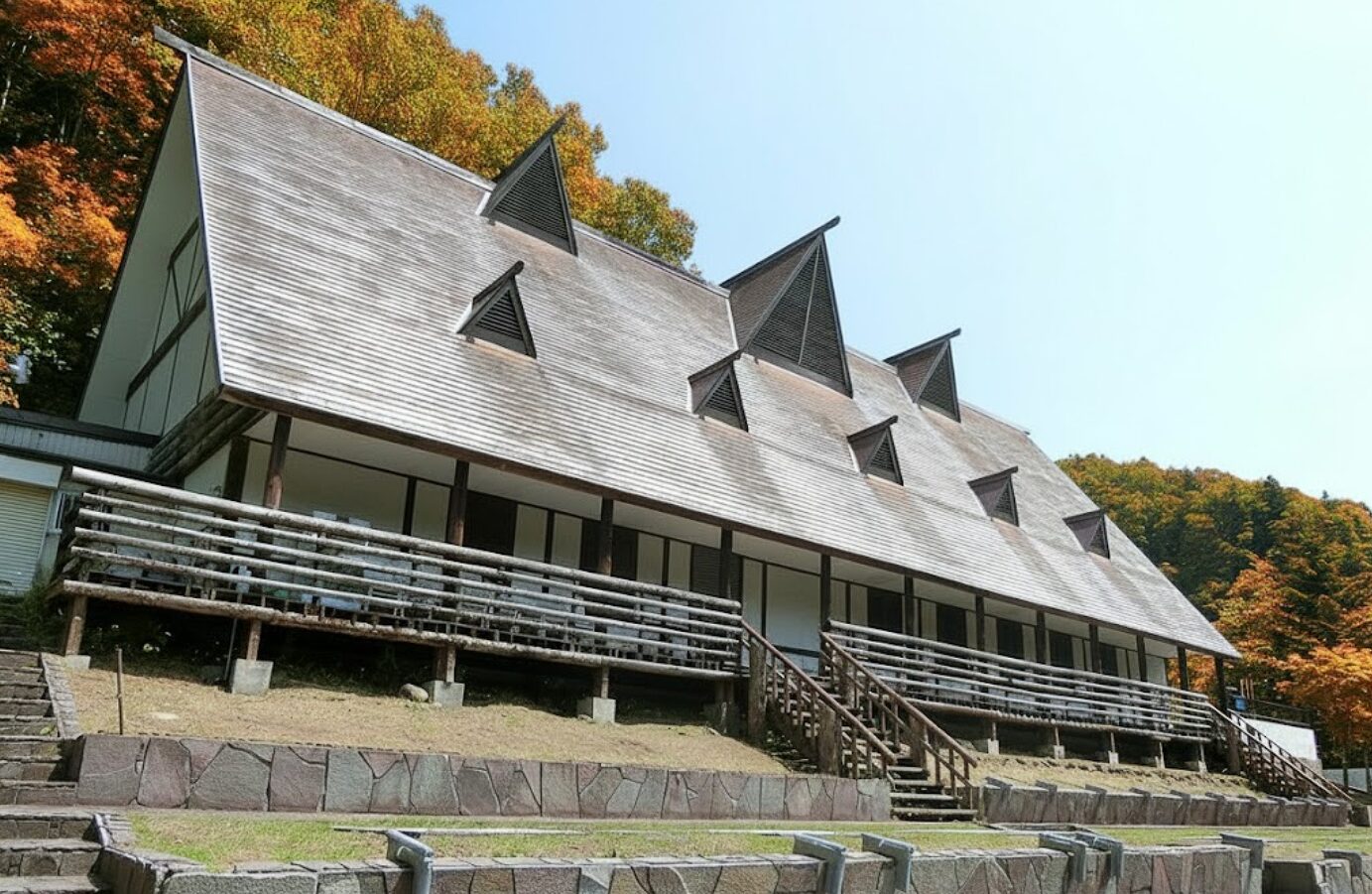
How to Visit Hōheikyō Dam
Go Early, Go Weekday — Like any popular momijigari spot, Hōheikyō Dam sees significant crowds during peak season. The difference between arriving at 9:00 AM on a Tuesday versus 11:00 AM on a Saturday is dramatic. Early weekday visits offer just thinner crowds and better light for photography, as morning sun illuminates the eastern slopes beautifully.
Time Your Visit — The leaves at Hōheikyō Dam typically begin changing in late September, with peak viewing from early to mid-October. This is earlier than southern Japan, where peak season runs into November. Check the annual koyo forecast (紅葉前線 — “autumn leaf front”) before planning your trip, as the exact timing shifts by a week or two depending on weather patterns.
Pack Smart — Temperatures in the mountains can drop significantly, especially in the morning and evening. Bring layers, even if Sapporo feels mild. The paths are well maintained but can be damp, so wear proper walking shoes with good grip. A compact picnic blanket is useful if you find a nice spot to rest — the forest floor is often wet, and you’ll want to pause and soak in the views.
Public Transportation — From JR Sapporo Station, take the Jōtetsu Bus (Kappa Liner) to Jōzankei, then catch the local shuttle to Hōheikyō Dam. If you’re staying in Jōzankei, there are shuttle buses that run between the onsen town and the dam. Check current schedules at the Jōzankei Tourist Association, as times change seasonally.
Combine with Jōzankei — Jōzankei village, about five minutes away by car (or via the shuttle bus), is one of Hokkaido’s top three onsen districts. The Futami Suspension Bridge offers excellent foliage viewing, and a walk along the Futami-Jōzan Trail lets you enjoy the Toyohira River flanked by vibrant colors. Look for the kappa statues scattered throughout the village — these mythical water creatures are Jōzankei’s mascot.
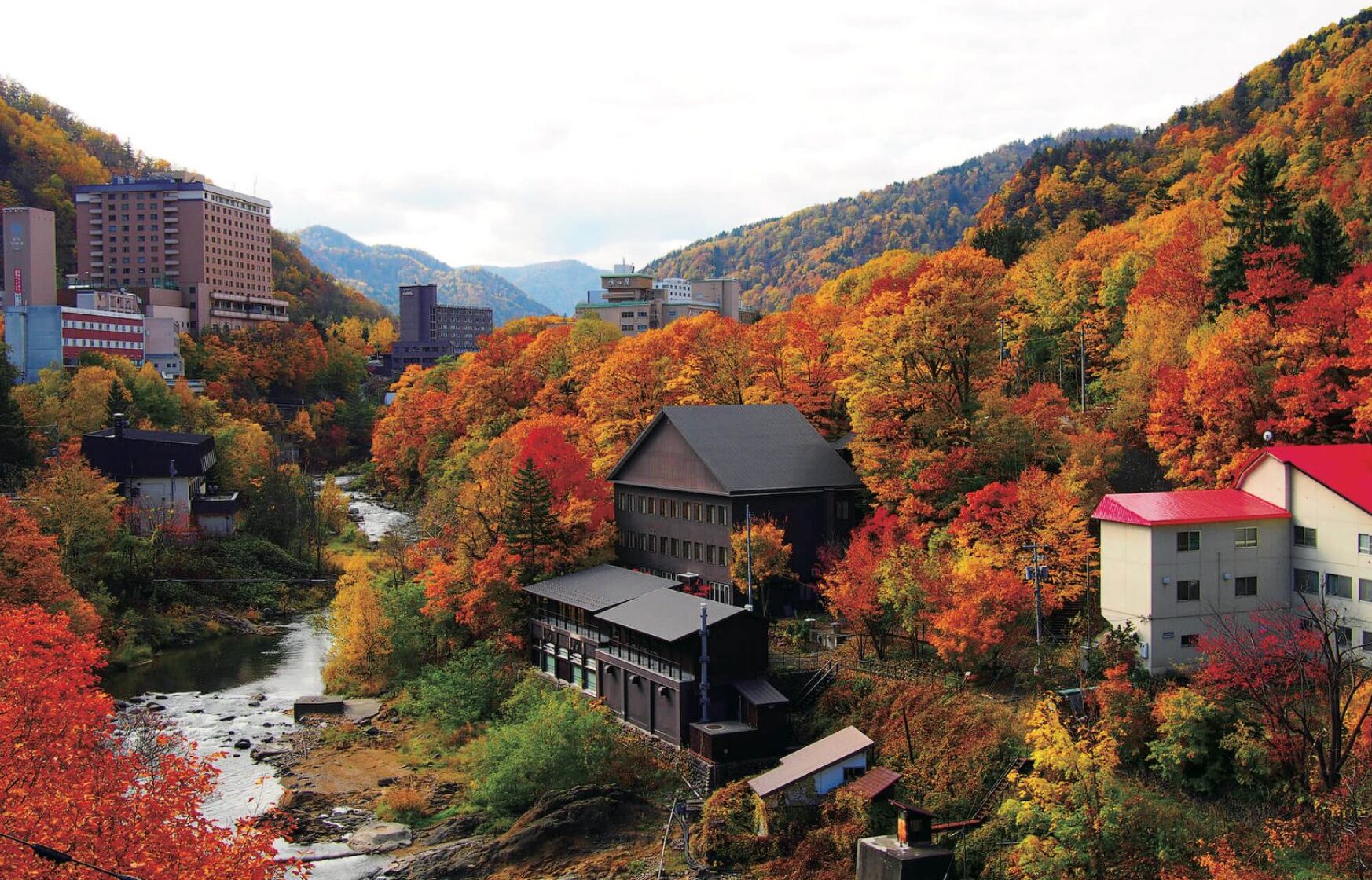
Hōheikyō Onsen
If you have time, don’t miss Hōheikyō Onsen, about a 13-minute drive from the dam. The hot spring water is drawn directly from underground without dilution or reheating. I am told its a natural onsen pretty much open all year even during the winter. Day-use bathing is available, and the outdoor baths surrounded by autumn foliage are exceptional. There are also camping facilities and even canoeing experiences if you’re feeling adventurous.
The onsen is famous for its Indian curry. Made with dozens of spices and served with fresh naan, it’s become something of a cult favorite among regular visitors. After spending a few hours hiking around the dam, warm curry and a hot bath make for a perfect ending to your momijigari adventure.
Reflections on Leaf Hunting
There’s a reason momijigari has endured for over a millennium in Japanese culture. It’s not just about pretty colors, though they’re certainly stunning. It’s about marking the passage of time, acknowledging the fleeting nature of beauty, and finding peace in seasonal transitions. Buddhist tradition sees the autumn leaves as a reminder that life is passing with each brilliant display is a tree’s last hurrah before winter dormancy.
Standing on that observation deck, watching the interplay of light on Jōzan Lake while surrounded by mountains dressed in their finest colors, I understood why generations of Japanese have made pilgrimages to witness koyo. The modern world moves fast, but autumn leaves change at their own pace, indifferent to our schedules and concerns. Taking time to simply stand and observe them is itself a small act of resistance against the tyranny of productivity.
Hōheikyō Dam is worth building an entire autumn Hokkaido trip around. Whether you’re a serious photographer chasing the perfect shot, a nature enthusiast seeking pristine landscapes, or simply someone who appreciates beauty in its most temporary forms, this place delivers. Just don’t make my initial mistake of dismissing it as “just a dam.” It’s so much more than that.
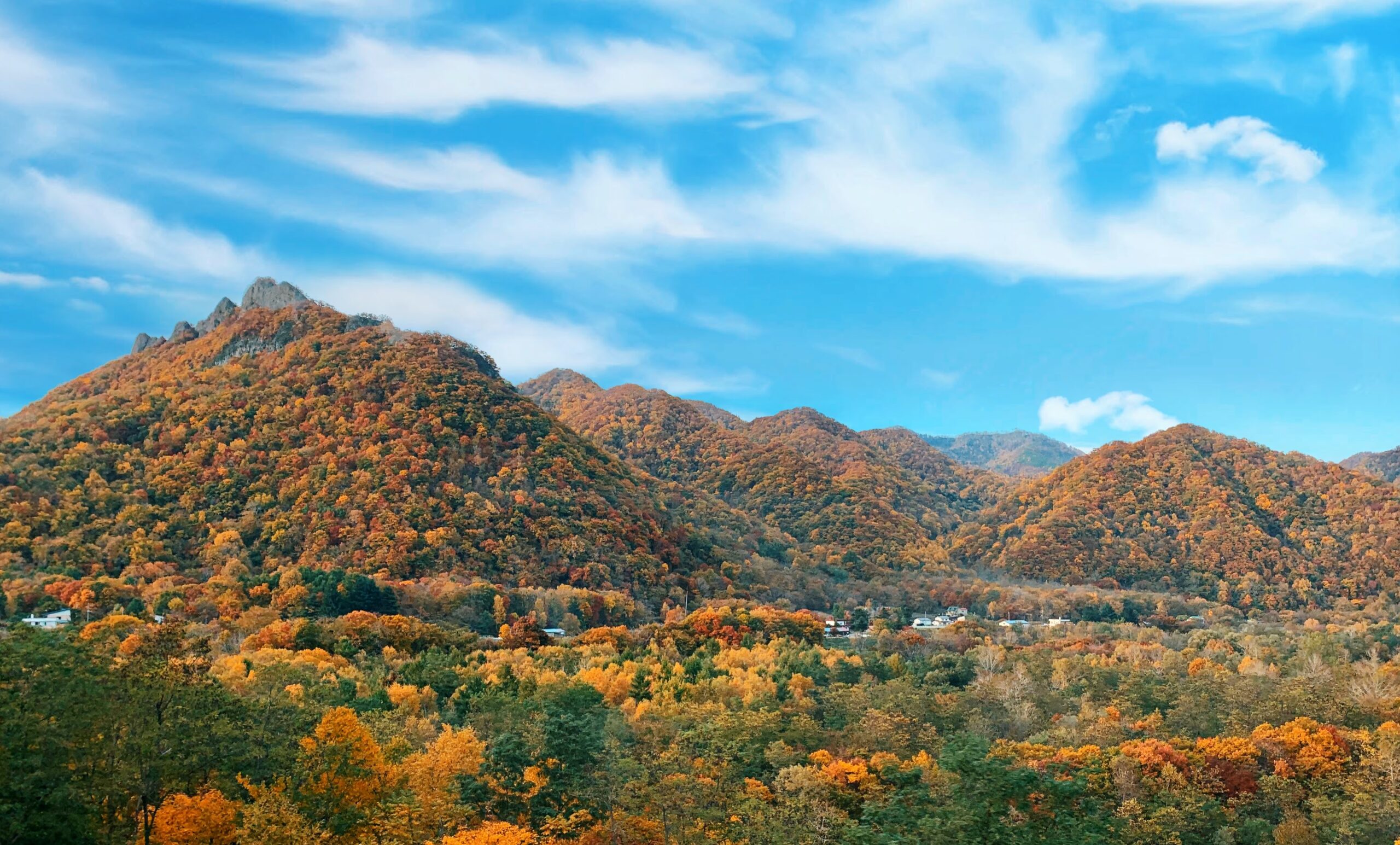
More to See in the Jōzankei Area
The Jōzankei valley offers numerous other autumn viewing spots within easy reach. Beyond Hōheikyō Dam and the Futami Suspension Bridge, consider exploring the surrounding areas of Shikotsu-Tōya National Park. If you have extra time in Sapporo proper, Hokkaido University in the city center features a famous ginkgo avenue that turns brilliant gold in late October to early November, providing urban momijigari for those who miss the mountain season.
The autumn leaf season is brief but intense in Hokkaido. Make the journey north while the leaves are falling, and you’ll understand why the Japanese have been hunting autumn colors for over a thousand years.