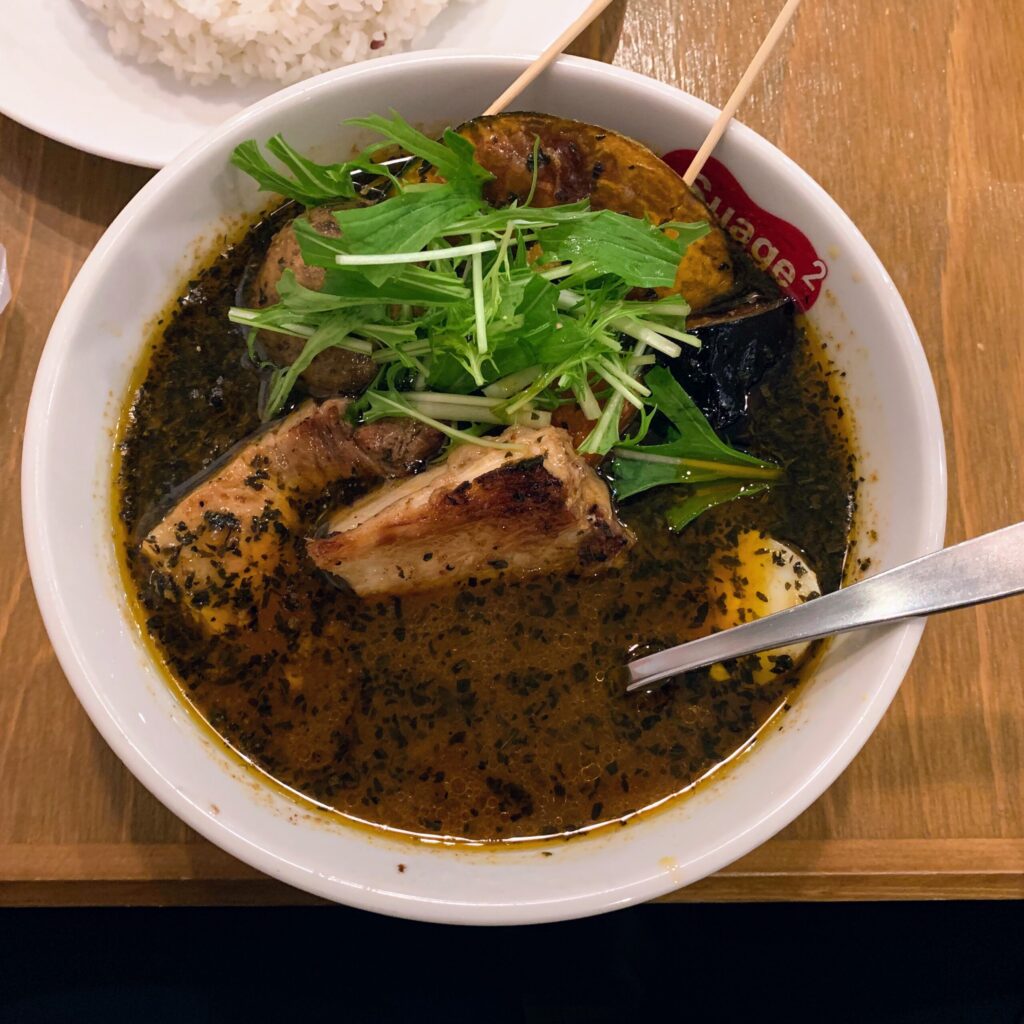
スープカレー
Sūpu Karē
Soup Curry
When you think of Japanese curry, you probably imagine that thick, sweet brown sauce ladled over rice. But Sapporo, the capital of Hokkaido, has its own take on curry that’s completely different. It’s called soup curry, and yes, it’s exactly what it sounds like: a curry that’s more like a soup rather than sauce.
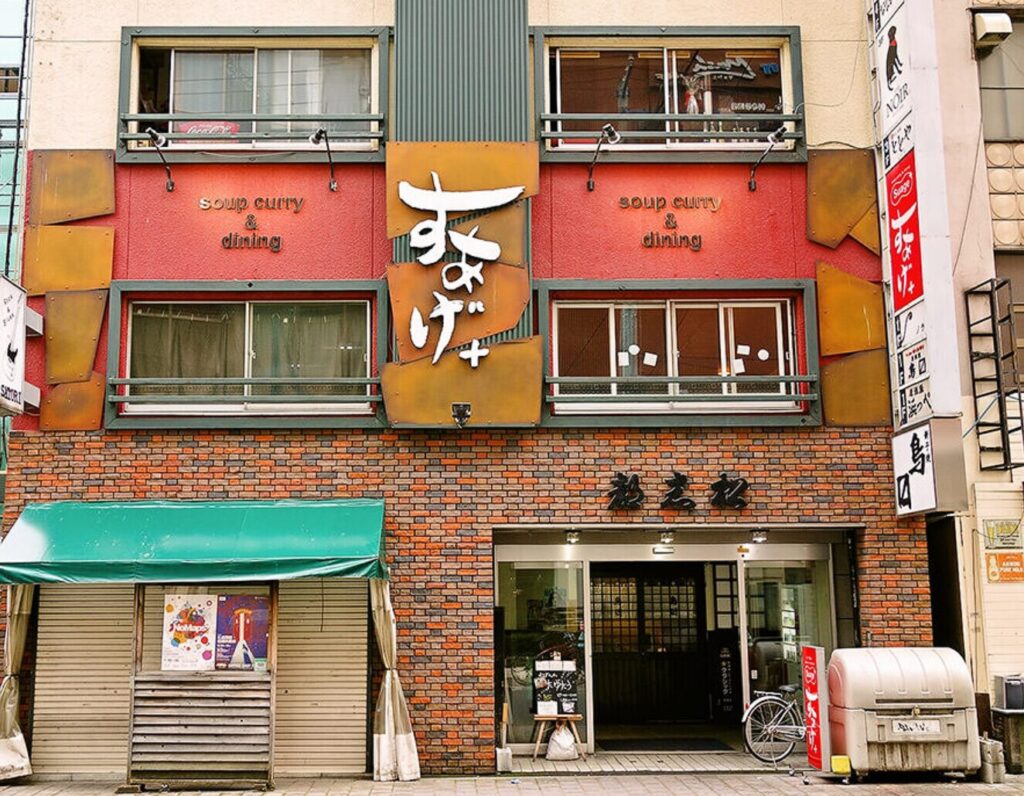
We first encountered soup curry at a small restaurant tucked down a side street in the Susukino district. The menu was overwhelming with customization options: spice level from 1 to 40, choice of soup base, multiple protein options, and a dizzying array of vegetable add-ons. When my order finally arrived, I understood why locals are obsessed with this dish.
Medicine Turned Soul Food
The story of soup curry begins in the 1970s at a Sapporo coffee shop called Ajanta, where they served something called “yakuzen curry,” which in English means medicinal curry. This original creation drew inspiration from Chinese and Korean medicinal herbal soups mixed with Southeast Asian and South Asian curry traditions from places like Indonesia, Thailand, India, Nepal, and Sri Lanka.
At first, it was just a thin broth with herbs and spices, designed to help customers’ health and digestion. But customers started asking for actual ingredients in their soup. After all, why waste perfectly good vegetables? So the shop began adding chunks of meat and vegetables, and soup curry as we know it was born.
The dish remained somewhat underground until the 1980s when more restaurants started offering similar dishes, and eventually a place called Magic Spice coined the term “soup curry.” The real breakthrough came around 2005, when specialty shops started multiplying and coupon magazines listing soup curry restaurants flooded Sapporo’s streets. Today, there are over 200 soup curry restaurants in Sapporo alone.
Why Hokkaido?
You might wonder why soup curry took off specifically in Hokkaido. The region has a long-established soup culture, with generations enjoying various soups and hotpots like ishikari nabe, sanpei-jiru, and butajiru. When you live in a place where winter temperatures regularly drop below freezing and snow piles waist-high, hot soup is about winter survival. So when this curry-flavored soup arrived, Hokkaido’s soup-loving residents naturally embraced it.
The timing also helped. Soup curry emerged during the peak of yōshoku culture. A kind of Japanese tradition of adapting foreign dishes that started in the Meiji era. It fit perfectly into Japan’s culinary landscape as something familiar yet innovative.
What Makes It “Real” Soup Curry?
After trying soup curry at half a dozen restaurants, I learned that while every shop has its own spin, certain elements are non-negotiable for authentic Sapporo soup curry.
The Soup Base
Unlike traditional Japanese curry with its thick, flour-based roux, soup curry has a light, broth-like consistency that you can actually sip. The soup typically includes coconut milk, curry powder, garam masala, garlic, ginger, pepper, tomato paste, and fresh chillies. Some restaurants use a dashi base, others go with chicken or vegetable stock. The key is that it remains thin and soup-like, never thick or gloopy.
The spice blend is crucial. This isn’t just curry powder dumped into chicken broth. Each restaurant guards their spice combination like a secret recipe, carefully balancing heat, aroma, and depth of flavor. You’ll often taste notes of cumin, coriander, turmeric, and other spices that would feel at home in South Asian cooking.
The Protein
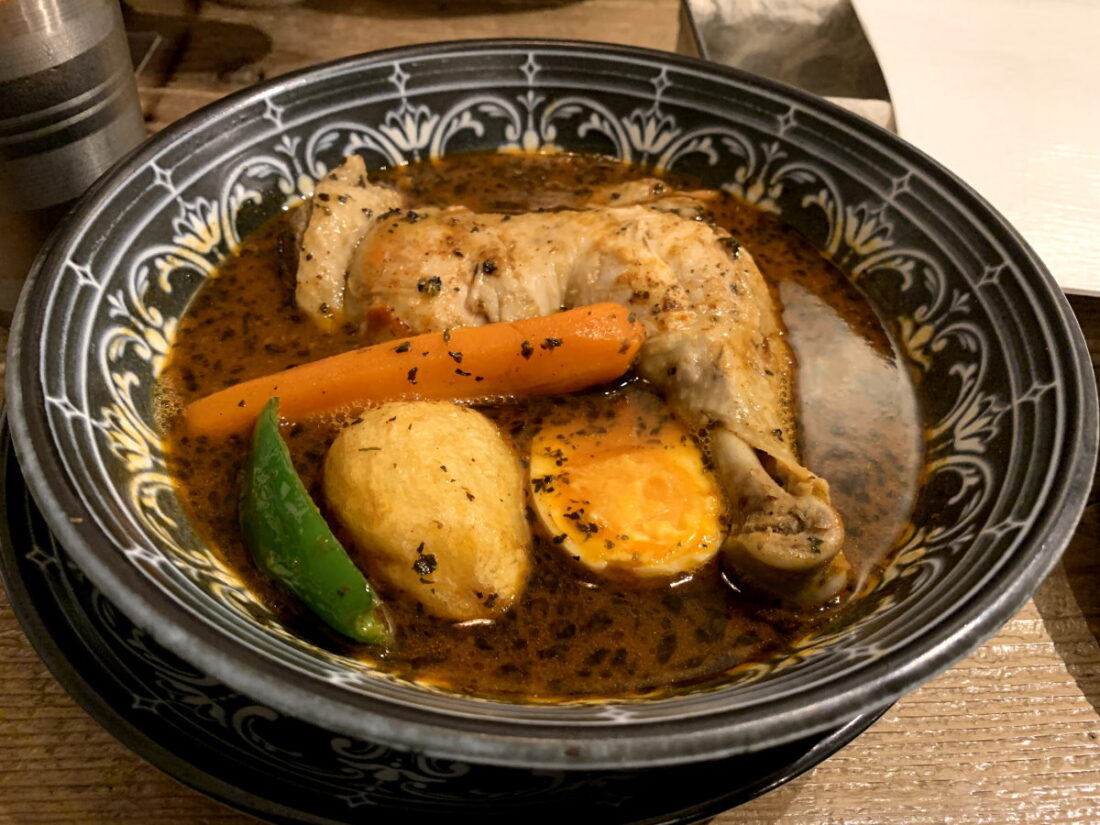
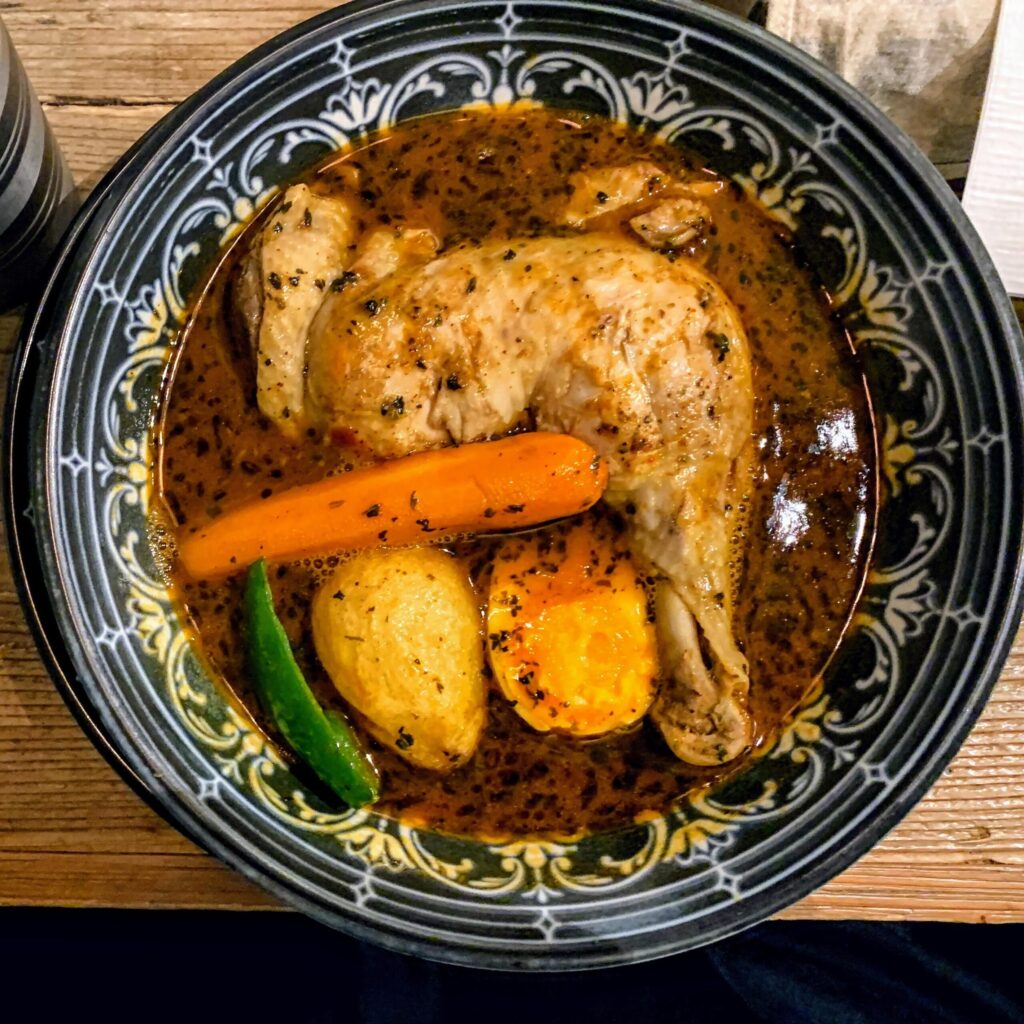
The classic protein is chicken. Usually a tender, slow-cooked chicken leg that falls off the bone or chicken meatballs. Other common options include thick slabs of pork bacon, lamb chops, and occasionally beef. What’s important is that the meat is substantial. No sad little scraps here! It must be chunky just and a little too large to fit in your mouth in one gulp. You want a piece of protein that’s worthy of being the centerpiece of your bowl.
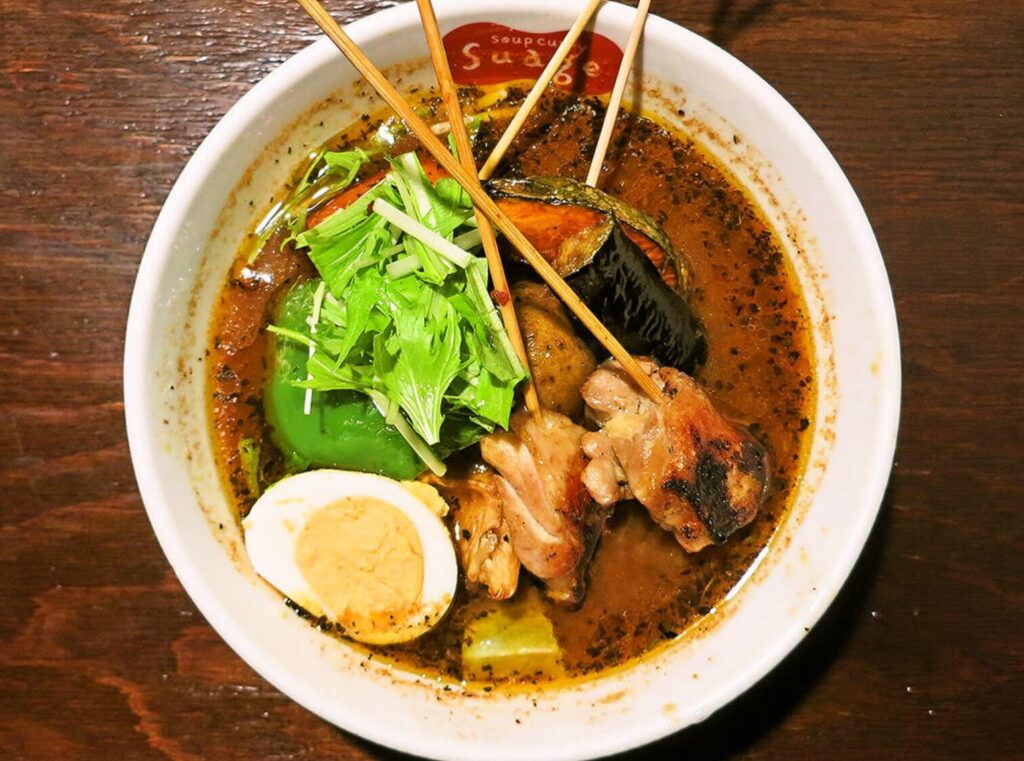
At one restaurant, I ordered the chicken leg soup curry, and the meat was so tender I could pull it apart with just my spoon. It had been simmered in the aromatic broth until it absorbed all those complex flavors.
The Vegetables
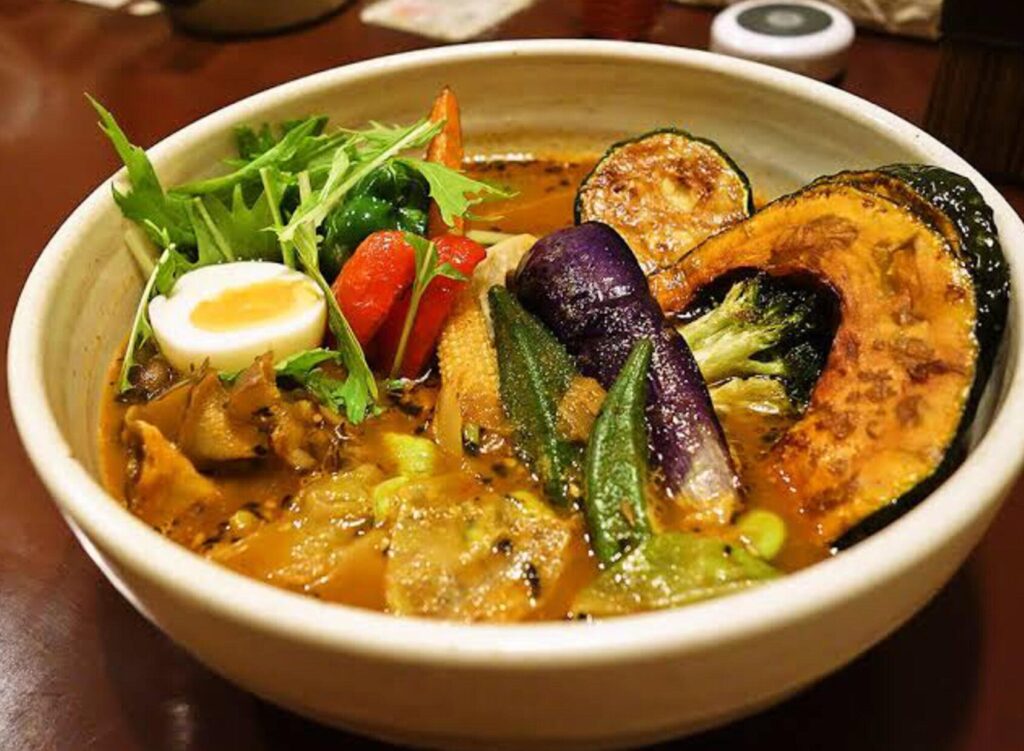
Here’s where soup curry really shines and where it truly reflects Hokkaido’s agricultural bounty. The vegetables are prepared “su-age” style. Suage means “flash-fried without batter.” This gives them a slightly crispy exterior while keeping the inside tender.
Standard vegetables include carrots, root vegetables like lotus and potato, kabocha pumpkin, seasonal mushrooms, eggplant, bell peppers, and okra. These aren’t diced into tiny pieces and hidden in the sauce. They’re cut into substantial chunks and arranged on top of your bowl like a colorful vegetable crown. Some places serve eight or more different vegetables in a single bowl.
The first time I bit into a piece of flash-fried kabocha from my soup curry, I was surprised by the contrast. So crispy on the outside, almost creamy on the inside, with just a hint of char from the oil. Each vegetable maintains its own distinct taste and texture instead of melting into mush.
The Rice
Unlike regular Japanese curry where everything is served together on one plate, soup curry always comes with rice on the side. I’ll say this now: you cannot skip the rice! This is about the eating experience. You scoop rice onto your spoon, dip it into the curry soup, and eat. This way, you control how much rice you want with each bite, and you can adjust as you go through your meal. When you’re nearly finished with the rice, it’s customary to transfer what’s left into the soup and enjoy the final bites together.
The Customization
When you order soup curry, you customize it to your preferences: your preferred protein, type of soup base, spice level, amount of rice, and any additional toppings. While traditional Japanese cuisine isn’t known for spiciness, soup curry has customizable heat levels ranging from 1 to 10 or even higher. I learned this the hard way when I confidently ordered a level 5 thinking “middle of the road” was safe. My mouth was on fire within three bites. Now I stick to level 2 or 3.
More Than Just Curry
What I’ve come to appreciate about soup curry is how it manages to be simultaneously comforting and exciting. The warm, aromatic broth is pure comfort on a cold day, but the variety of spices, vegetables, and that customizable heat keep it interesting bite after bite.
It’s also remarkably healthy compared to regular Japanese curry. There’s no heavy roux, no butter, just a clean broth packed with vegetables, quality protein, and medicinal spices. You can actually feel virtuous while demolishing a bowl of this stuff.
If you find yourself in Sapporo, hunting down good soup curry should be near the top of your list. Some famous spots include Garaku, known for their rich dashi-based broth with spice levels up to 40, and Treasure, Garaku’s sister restaurant with a completely different soup style. But honestly, with over 200 shops in the city, part of the fun is wandering around and finding your own favorite.
Making It at Home
Inspired by my soup curry adventures, I’ve been experimenting with making it at home. Here’s a simplified version that captures the essence of Sapporo soup curry:
Sapporo-Style Soup Curry
Serves 2-3
For the curry soup:
- 2 tablespoons neutral oil
- 1 large onion, sliced
- 2 cloves garlic, minced
- 1 tablespoon fresh ginger, grated
- 2 tablespoons curry powder
- 1 tablespoon garam masala
- 1 teaspoon cumin powder
- 4 cups chicken stock
- 1 tablespoon soy sauce
- 1 tablespoon mirin
- 1 can (14 oz) diced tomatoes
- Salt and pepper to taste
For the protein:
- 2-3 chicken legs, bone-in (or 4-6 chicken wings)
For the vegetables (su-age style):
- 2 medium potatoes, cut into large chunks
- 1 small kabocha squash, cut into wedges
- 1 carrot, cut into large pieces
- 1 bell pepper, quartered
- 2 small Japanese eggplants, halved lengthwise
- 4-6 okra pods
- Oil for frying
To serve:
- 2-3 cups cooked Japanese short-grain rice
- Soft-boiled eggs (optional)
Instructions:
- Heat oil in a large pot over medium heat. Add onion and cook until softened, about 5 minutes. Add garlic and ginger, cooking for another minute until fragrant.
- Add curry powder, garam masala, and cumin, stirring constantly for about 30 seconds to toast the spices.
- Pour in chicken stock, soy sauce, mirin, and diced tomatoes. Bring to a simmer.
- Season chicken legs with salt and add them to the pot. Reduce heat to low, cover partially, and simmer for 30-40 minutes until chicken is tender and cooked through.
- While the chicken simmers, prepare your vegetables. Heat about 1-2 cm of oil in a large skillet over medium-high heat.
- Working in batches, flash-fry each vegetable separately until lightly golden and tender. Start with potatoes (5-7 minutes), then kabocha (3-4 minutes), carrots (3-4 minutes), bell peppers (2-3 minutes), eggplant (2-3 minutes), and finally okra (2 minutes). Drain on paper towels and season lightly with salt.
- Taste the soup and adjust seasoning with salt, pepper, or additional spices as needed.
- To serve: Ladle the curry soup into deep bowls. Remove chicken from soup and place on top. Arrange the fried vegetables artfully around the chicken. Add a halved soft-boiled egg if desired. Serve with rice on the side.
- Eat by scooping rice onto your spoon, dipping it into the curry soup, and enjoying the combination. Mix and match vegetables with each bite.
Notes:
- Adjust the spice level by adding cayenne pepper or fresh chili peppers to taste.
- Some recipes add coconut milk for richness—try replacing 1 cup of chicken stock with coconut milk.
- The vegetables should maintain some texture; don’t overcook them during frying.
- For a shortcut, many Asian grocery stores sell pre-cut frozen vegetable mixes specifically for soup curry.
Worth the Trip
Soup curry might be a relatively young addition to Japanese cuisine (only about 50 years old) but it’s earned its place as Hokkaido’s soul food. It’s the kind of dish that makes you understand why people love it so fiercely. Warm, spicy, healthy, customizable, and deeply satisfying, especially when you’re facing down a Sapporo winter.
If you can’t make it to Hokkaido, more soup curry restaurants are popping up around Japan and even internationally. But like many regional specialties, there’s something special about eating it in its birthplace, surrounded by Sapporo locals who’ve been debating the merits of their favorite soup curry shops since childhood.
Now if you’ll excuse me, I have about 190 more soup curry restaurants in Sapporo to try.